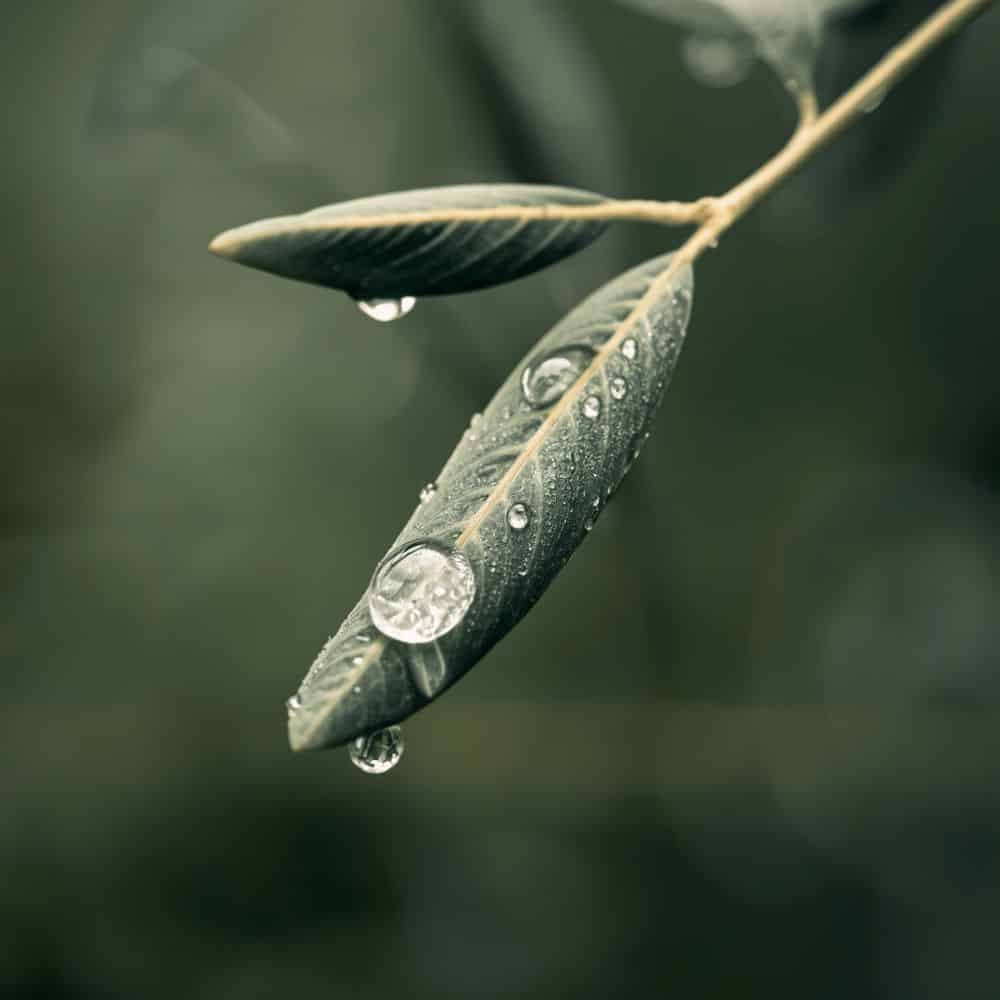
An olive leaf, a stalk of wheat, an orange peel, what remains after the grape harvest. Humble materials, almost invisible. And yet, somewhere among them, one of the most fascinating stories in contemporary design is taking shape.
There are things we see so often that, eventually, we stop noticing them.
An olive leaf is one of them.
It is everywhere in the Greek landscape: in olive groves, in courtyards, along the side of the road. The olive tree is so closely associated with its fruit and with olive oil that its leaves usually remain outside the frame of the story.
For Liofyllo, however, that is exactly where the story began.
It started with a simple question: what could this familiar, humble material become if we stopped seeing it as something left over and began to see it as a raw material?
Through research, testing and experimentation, Welia and Marelia were created: two materials that take the olive leaf beyond the agricultural cycle and into a completely different world — that of design and creation.
And however distinctive that journey may seem, Liofyllo is not alone.
In recent years, something particularly interesting has been happening in different parts of Europe: people are returning to materials that have always been around them and looking at them for a second time.
Not with the question, “What should we do with what is left over?” but with a far more creative one:
What else could it become?
Sometimes the idea is already right in front of you.
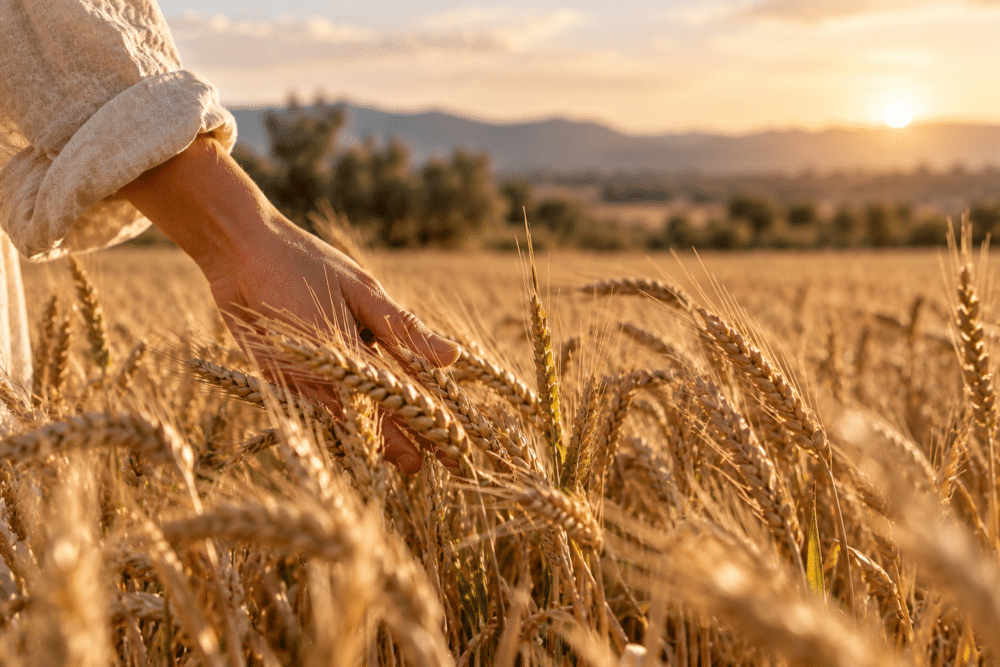
In Kilkis, in northern Greece, the answer was found in a wheat field.
Once the grain has been harvested, the stems remain behind. They are thin, naturally hollow and — if you look closely — already shaped rather like a drinking straw.
That is how staramaki was born.
Suitable wheat stems are collected after harvest, selected, cut to size, washed, heat-treated, dried and inspected one by one before being packaged. No new material is manufactured to imitate plastic. Instead, the form that nature has already given the plant is put to use.
Perhaps that is what makes the example so appealing in its simplicity. Someone looked at a stem that had been there after every harvest, year after year, and saw not a leftover, but a product.
In Sicily, the raw material was considerably more fragrant.
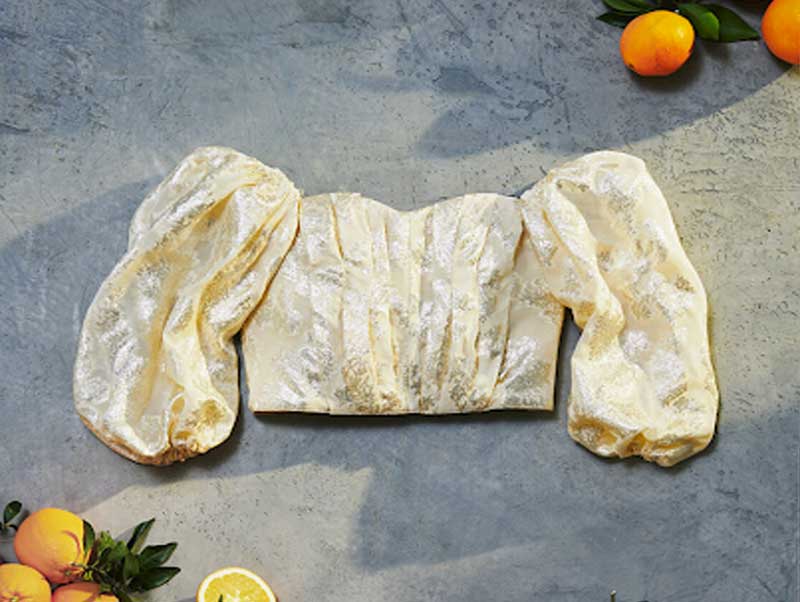
Every time an orange is turned into juice, a substantial part of it remains behind in the form of peel, pulp and other by-products. Orange Fiber, a company founded in Catania, decided to begin precisely with what comes after.
It developed and patented a process through which cellulose is extracted from citrus juice by-products and then used to produce textile fibres and fabrics. According to the company, the so-called pastazzo — what remains after juice production — represents around 60% of the weight of the fresh fruit.
The idea did not remain in the laboratory. In 2017, Salvatore Ferragamo presented a women’s capsule collection created in collaboration with Orange Fiber. A by-product of the food industry had made its way into the world of fashion.
And then comes the grape.
Italian company VEGEA developed GrapeSkin®, a material made using raw materials connected to wine production and designed for applications ranging from fashion and footwear to interior design, automotive use and packaging.
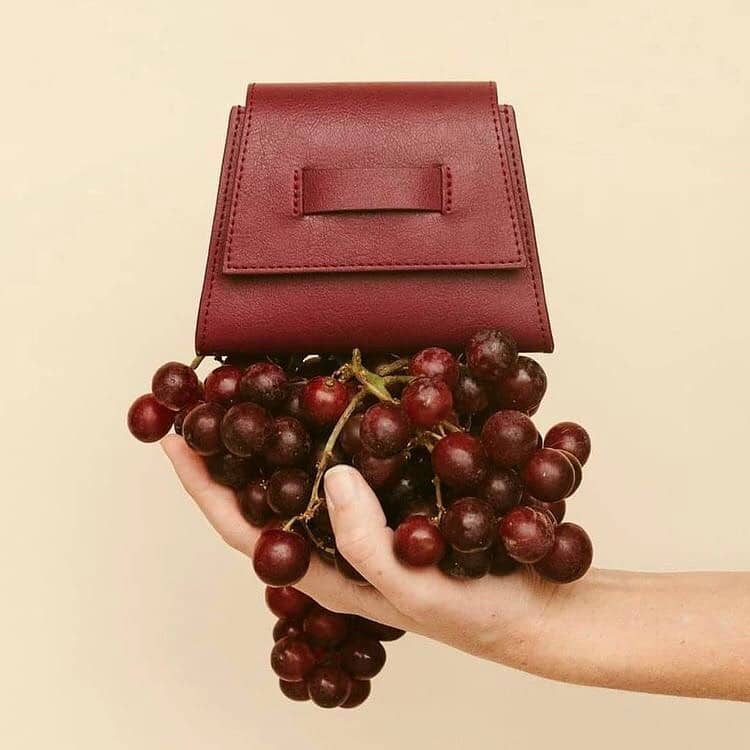
Three completely different products. Wheat. Orange. Grape.
What do they have in common?
The moment someone decided that a material’s first use did not have to be its last.
From “left over” to “worth something”
This shift in the way we think about materials is more than an attractive design trend.
It forms part of a much broader conversation around the bioeconomy and bio-based materials. The European Commission uses the term to describe products derived from biological resources — including organic waste, residues from primary production and by-products of industrial processes — and already highlights applications in sectors such as textiles, furniture, construction and packaging.
There is, however, one important detail we should not overlook.
The fact that a material comes from a plant or an agricultural residue does not automatically make it sustainable.
“Natural” is an appealing word. It is not evidence.
To understand whether a new solution is genuinely better for the environment, we need to look at its entire journey: the processing involved, the energy required, any additional materials used, its lifespan, transport, recyclability and, ultimately, what happens when the product reaches the end of its useful life.
A major scientific review comparing life-cycle assessments of bio-based and conventional polymers[1] showed exactly how complex this picture can be. A material’s origin alone is not enough to conclude that it has a lower overall environmental footprint.
And perhaps that makes the conversation even more interesting.
Because real innovation is not about simply labelling something “green”. It is about creating a material that has a genuine reason to exist: one that is functional, durable, useful and as responsible as possible in the way it uses resources.
Back to the olive tree
At this point, the story returns to where it began.
To the leaf.
For Liofyllo, the olive tree has never been simply a symbol used to give a product a sense of “Greekness”. The interest has always been in the material itself: in the possibility that a residue so closely linked to the Greek landscape could be given a different life.
Welia and Marelia were born from that search. From there, the material moved into the hands of design — into objects, surfaces and creations that retain something of their original source without being confined by it.
Perhaps because we live in a place where the olive tree is everywhere, the first thing we had to do was something very simple:
stop and look at it again.
That, after all, is what connects Liofyllo with the other stories in this article. Not that they all use the same technology, or that their materials are alike. They are not.
What they share is the same small shift in perspective.
The moment when “this is left over” becomes “perhaps this has value.”
And perhaps innovation is not always hidden in something that has yet to be invented.
Sometimes it lies in what has always been in front of us — we simply have not looked closely enough.
A stalk of wheat. An orange peel. A grape. An olive leaf.
Small, everyday materials carrying within them the possibility of becoming more than their first use.
And perhaps that is one of the most compelling challenges of our time: learning to see matter not only for what it is, but for everything it might still become.
——————————————-
1 Walker, S. & Rothman, R. (2020). Life cycle assessment of bio-based and fossil-based plastic: A review. Journal of Cleaner Production, 261, 121158.